GILLINGHAM – SOME INTERESTING HISTORICAL FACTS
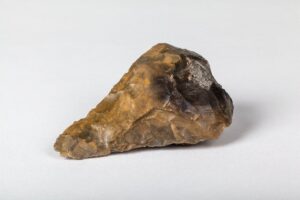
The earliest dated archaeological find from the parish is a Palaeolithic flint hand axe.
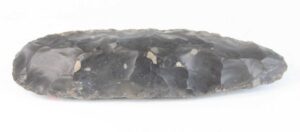
Flint tools were used throughout the prehistoric period and Neolithic worked flints and Neolithic to Bronze Age worked flints have also been found.
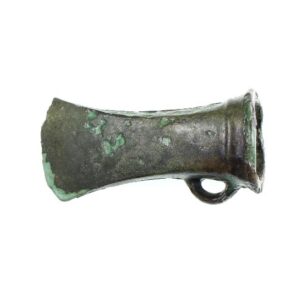
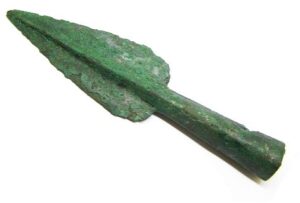
In the Bronze Age tools began to be made of metal and a fragment of copper alloy socketed axe head illustrates that this new material was also used in Gillingham. A Bronze Age spearhead and fragments of Bronze Age pottery have also been recovered.
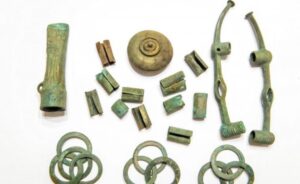
There is evidence for activity in the Iron Age. A metal detectorist has recovered an Iron Age harness and fragments of Iron Age pottery have also been found. Although there have been several prehistoric finds from the area there is no strong evidence for areas of occupation or settlement.
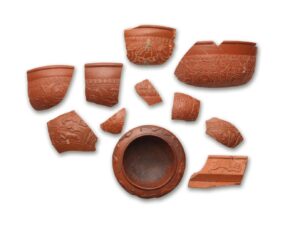
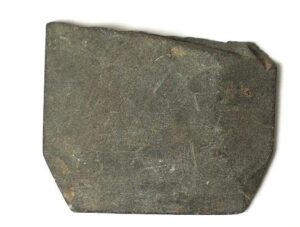
The same could be said for the Roman period. Casual finds of Roman coins and brooches indicate that there was activity in the area but no areas of settlement have been identified. Fragments of pottery, including high status Samian, has also been found. Part of a Roman bracelet and a Roman cosmetic palette, used for mixing minerals before applying to the face, were also found.
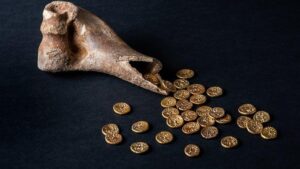
There is more concrete evidence for Saxon occupation. Although no settlement has been uncovered metal detectorists have recorded a large number of Early Saxon brooches, buckles and lumps of melted copper alloy. These have been interpreted as the site of an Early Saxon cremation cemetery. Other evidence for activity in the Saxon period includes possible fragments of Early Saxon pottery, a Saxon iron socketed axehead and a Late Saxon cross-shaped brooch. A hoard of Late Saxon coins may also come from this parish although the records are not completely clear.
Gillingham is called Kildincham in Domesday Book. It now comprises four parishes, Gillingham All Saints, Gillingham St Mary, Winston and Wyndale but at one time the two latter parishes were completely separate and both had churches dedicated to St Andrew.
In early Gillingham there were two lordships and two churches. The greater lordship or manor had belonged to Higand and was taken by William the Conqueror for himself. In King Stephen’s reign it was granted to Earl Hugh Bigod with Stockton, Geldeston, Wyndale, etc. The lesser manor had belonged to Gurd, brother of King Harrold. His freemen were dispossessed and in 1272 it belonged to the de Ponte family. This manor had the patronage of the church of St Mary which is the present beautiful early Norman church. In 1320 Sir Bartholomew Bateman owned the property. He died of the Black Death in 1349 but the property remained in his family until the 28th year of Henry VIII. There is no monument to the Bateman family in Gillingham but they owned the property for 200 years. In 1547 Thomas Bateman sold the property at Gillingham to John Everard, member of a well known Norfolk family. John Everard was buried in St Mary’s church in 1553. There is an Everard Charity given in 1596. After that time there is no more mention of the family in Gillingham. The Everard’s were Catholics and perhaps lost their property because they refused to change their religion. In 1603 Queen Elizabeth gave the manor to Sir Nicholas Bacon. The first Bacon who lived at the Hall was Sir Francis, the Lord Chancellor, who died in 1623. He built the present Hall in 1612. The property continued with the Bacon’s until the heiress, Susan Bacon, married a Mr Schutz of Hanoverian descent who came to England with William of Orange. Susan Bacon became heiress to the property through the death of her brother Edmund Bacon who died of small pox when he was very young. There is a large tomb in Gillingham churchyard in memory of Elizabeth, widow of John Bacon Schutz, born 1761 died 1847. Also of their two daughters, Susan Elizabeth 1783-1853 and Harriet, widow of Lord George Thomas Beresford 1787-1861. Lady Beresford had four daughters and the estates next became the property of her eldest daughter Harriet Georgiana who married Admiral Eden. Mrs Eden died in 1889 when her nephew Mr John George Kenyon inherited. He died in 1941.
Gillingham must have been a place of some importance during the time the Batemans owned it 1320-1547 and many of its inhabitants were seafaring men. In 1291 a Flemish merchant complained that his ship had been plundered at Dunwich, and that the pirates had taken the booty and sold it at Gillingham. Dunwich in those days was an important port and only 16 miles from Gillingham and the River Blyth was navigable as far as Blythburgh. Gillingham was once quite near an estuary of the sea which came up as far as Bungay over what is now marshland. In the year 1000 there was a ferry from Beccles to the foot of Dunburgh Hill. The water gradually receded and in 1268 we hear of some monks building a bridge over the river to Gillingham. In the reign of Richard II we hear of roads and causeways across the marshes. The bridge built by the monks of Bury was used until about 1870 when it was rebuilt. It was very narrow, only wide enough for one cart to pass over. The bridge which replaced the old one is still in use today, but is very narrow for present day vehicles. There is now a Beccles bypass which runs across the marshes and meets Gillingham between the village hall and St Mary’s Church and this uses a new bridge across the river between the existing bridge and Boaters Hill.
Much of Gillingham is reclaimed marshland, and although the floods have not been so bad recently the marshes were often flooded and people rowed in boats to Beccles. The last serious floods were in 1947. There was very bad flooding in 1911 at harvest time and corn was floating in the fields at Manor Farm. Some cattle swam down the river as far as Beccles and landed near the Pickerel Inn where they were revived with brandy.